
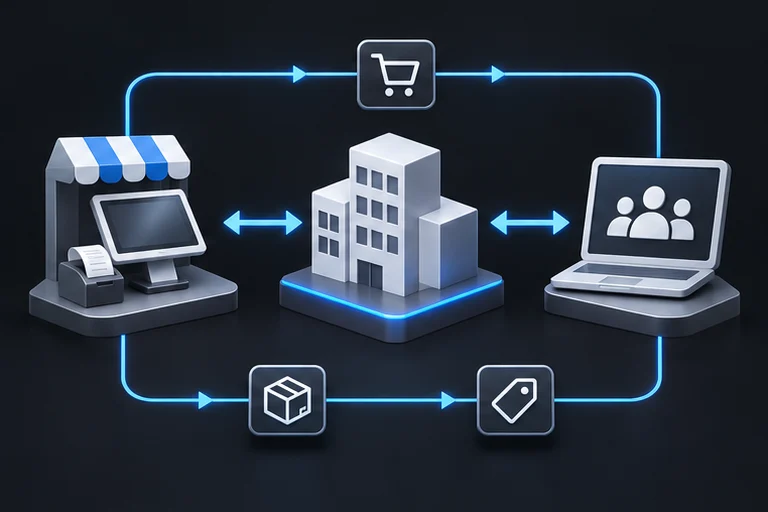
ERP POS CRM integration gets difficult when the same sale means different things to three systems. The till needs a receipt, finance needs a posting, and customer service needs a record it can find when a return arrives. Treat those as separate obligations attached to one transaction.
Draw the ERP POS CRM integration map
Name the owner of each record. The POS can own the sale event, ERP the accounting posting and CRM the contact record, depending on your systems. Carry stable identifiers for the sale, branch and item. Define when customer identity is optional and decide how a refund links to the original receipt.
Test repeats, late events and outages
If a shop loses connectivity, its next attempt should not create another sale. Use a stable transaction key and log integration outcomes. Put failures into a queue that finance or operations can resolve without editing the database. Reconcile receipt counts, refunds and net totals in EGP at closing.
Anonymized scenario: a cross-branch return
A hypothetical Egyptian chain allows a purchase from one branch to be returned at another. During the pilot the second branch can locate the original receipt and record a partial refund, but access is restricted by role. Finance compares ERP postings with both tills before opening the feature nationally.
FAQ
Do all three systems need live updates?
Set latency per job. A loyalty lookup may need an immediate answer while a finance export can run later with a reconciliation check.
What should we ask vendors for?
Request test access, event samples, rate limits, identifier rules and documented failure responses before estimating the integration.
Bring one sale and one return
Send Code Tank sanitized examples from both paths to identify the data owner and the first integration test.