
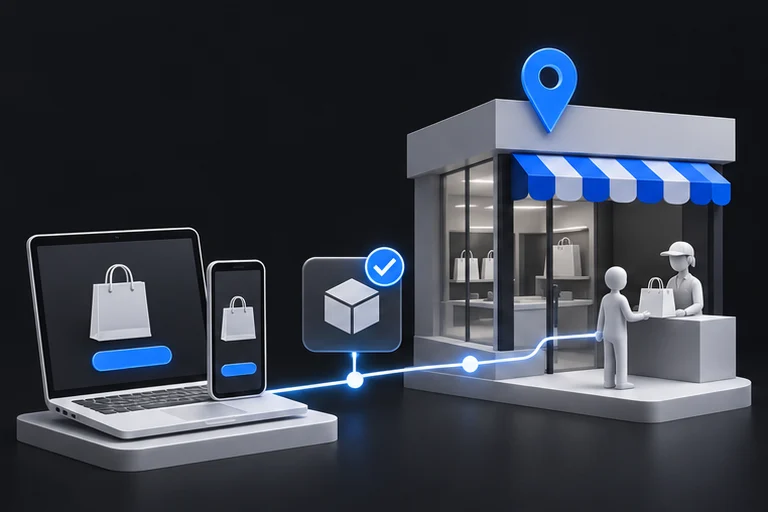
An omnichannel retail platform makes promises a store has to keep. Showing a product online is simple compared with holding the right item for pickup while another customer stands at the till. The design work begins with deciding when a unit is actually available to promise.
Define availability for the omnichannel retail platform
Separate on-hand stock, damaged stock, reserved stock and stock available for sale. Define when a reservation expires and how an employee releases it. If inventory updates are delayed, display a promise the branch can honor. Measure cancellations due to stock and record how long confirmed pickups wait at the counter.
Give the branch a queue it can operate
A pickup queue needs an item, order number, due time and a way to report exceptions. Test Arabic labels, product identifiers and the handover at a busy time. Agree who can move an order to another branch or authorize a refund, and what message the customer receives.
Anonymized scenario: one pickup location
A hypothetical Egyptian retailer enables pickup for a small catalogue at one location. It compares promised and actual readiness, then reviews missing stock and abandoned pickups. It adds more products once the staff can reconcile reservations and the counter can handle arrivals without an extra call.
FAQ
Does omnichannel require a new storefront?
You can start with the existing storefront if it can exchange order and availability states reliably.
What should we measure beyond online orders?
Track stock-related cancellations, pickup readiness, returns, failed handoffs and contribution after fulfilment cost.
Plan a store pilot
Show Code Tank how a product is picked, held and returned today to define the first retail journey.