
Legacy system modernization is easiest to govern when each release has a boundary. A decades-old order system may still produce the right invoices. Its biggest risk might be that nobody can deploy it safely, or that another system can read its data only through a daily file.
Break legacy system modernization into business capabilities
List tasks such as creating a quote, posting an invoice and approving a return. For each, name the owner, the authoritative data and downstream dependencies. Choose a small capability with enough transaction volume to compare old and new results. Give it a defined interface so the rest of the business can continue to use the current system.
Reconcile before switching writers
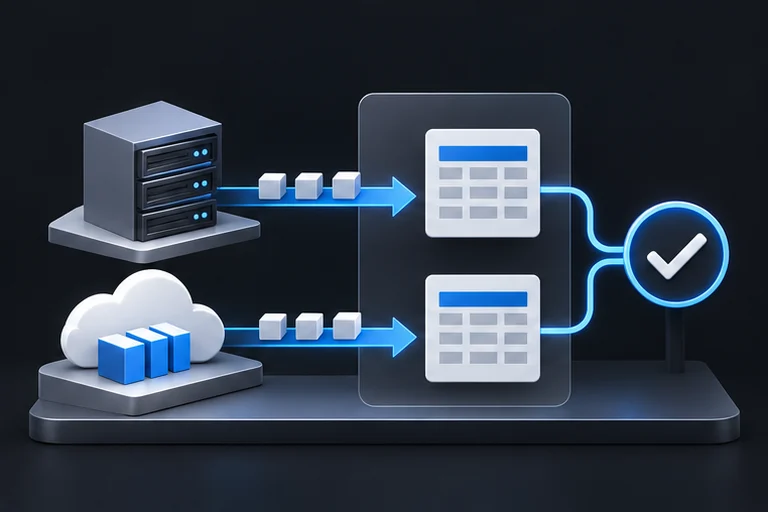
Run the new logic beside the old using the same inputs. Compare totals, timestamps and rounding rules, then investigate each meaningful difference. Keep one system authorized to write each record at any moment. Rehearse rollback and decide how to account for transactions created after a switch.
Anonymized scenario: an Alexandria wholesaler
A hypothetical wholesaler keeps billing in its existing system and first moves order-status lookup to a new portal. The pilot tests late updates and amended orders. Once staff can reconcile discrepancies without asking engineering, the company considers moving the next workflow. Finance keeps its month-end controls throughout.
FAQ
Can a database move first?
It can, provided data owners and dependent jobs are mapped and restoration has been rehearsed. Sometimes a read-only service is a safer first step.
How do we measure progress?
Track operating incidents, deployment recovery time, reconciled records and the number of manual workarounds removed.
Scope a safe migration
Ask Code Tank to review one system boundary, a sample export and the business dates you cannot disrupt.