
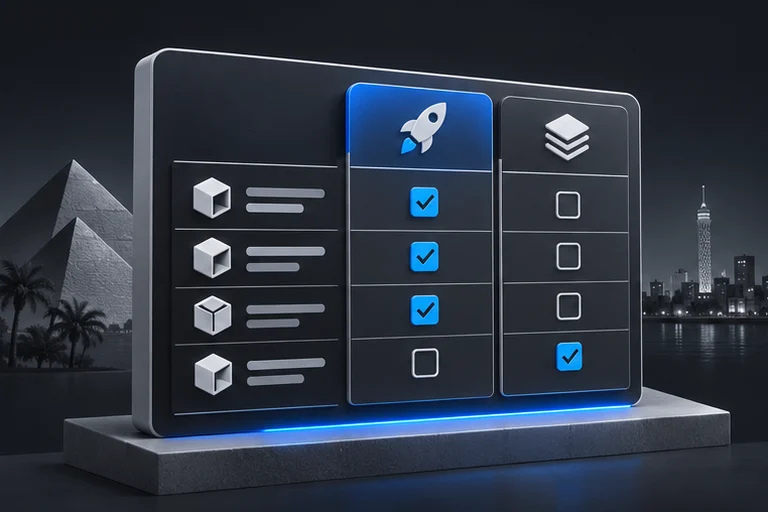
MVP development in Egypt begins with a choice about what you need to learn from real users. If an operations sponsor wants to know whether customers can book without calling a branch, the pilot must capture completed bookings and the calls that still happen. A long list of features can obscure that test.
Set the scope for MVP development
Choose one cohort and one job they repeat. Describe the full path, including cancellations and staff overrides. Put the features that support the test in the first release and put the rest on a later list. Decide what can be handled manually by staff, who owns that work and how much manual work the pilot can absorb.
Define what qualifies as a successful launch
Write a short acceptance checklist for the target phones, Arabic copy, loading failures, duplicate submissions and support. Add analytics for the start and finish of the task, and a way to tell which failures came from the product and which came from the underlying operation. Agree who can pause the release.
Reserve time after go-live
Give someone responsibility for reviewing drop-offs and speaking to operators. Judge the result against a baseline. A booking form may show a high completion rate while staff make follow-up calls for nearly every submission. In that case the next release should fix confirmation before adding another customer segment.
Anonymized scenario: branch booking
A hypothetical Egyptian service chain pilots online booking at one branch. Staff confirm exceptions from a shared queue. The first release tracks requests, confirmations and attendance, while a new loyalty module waits. The team can now see which parts of the booking task actually moved online.
FAQ
Does an MVP require a native app?
A responsive web flow can test many journeys. Use native development when the test depends on device capabilities or repeat behavior the web path cannot support.
How should the project be priced?
Compare assumptions, acceptance criteria, integrations and post-launch support. Ask for a range if material dependencies remain untested.
Plan the first cohort
Bring Code Tank your target user, one workflow and your proposed success metric. Use them to draw a release boundary.