
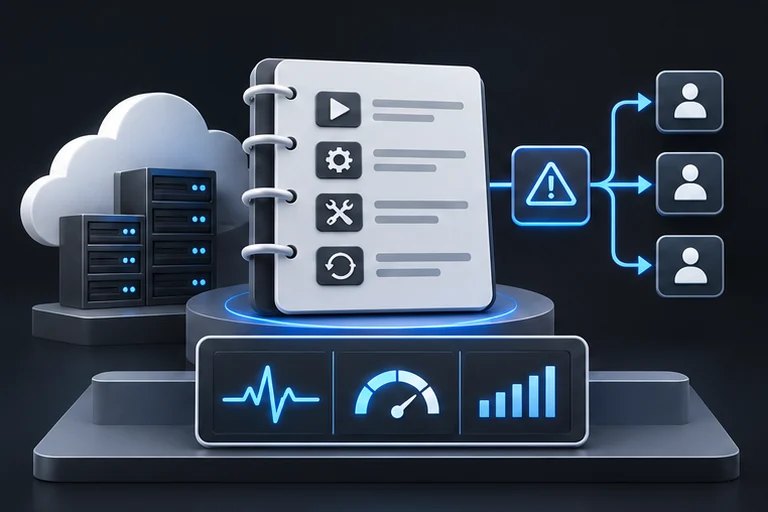
DevOps and cloud operations begin to pay off when the person on call knows which alert requires action. A CPU chart can look normal while orders fail because a payment callback is stuck. Design operations around the service customers experience, then work back to infrastructure.
Make DevOps and cloud operations measurable
Choose signals tied to a job, such as the proportion of valid requests completed or the time from confirmed payment to receipt. Set an observation window and clarify which outages or exclusions count. Assign owners for deployment, access, billing and incident communication. Agree on working-hour and after-hours cover before the first customer-facing release.
Rehearse release and recovery
Test rollbacks and practice restoring a backup to a separate environment. Record how old the latest recoverable data can be and how long restoration should take. Use logs that trace a request without exposing customer data. For Egyptian businesses relying on external payment or logistics systems, test what happens when those services respond late.
Anonymized scenario: queues before dashboards
A hypothetical Egyptian retailer finds that inventory updates run behind while checkout still responds. Its team adds an alert for queue age and lets store staff see when stock was last refreshed. The runbook gives operators a manual fallback and tells engineering when to pause further changes.
FAQ
Is an uptime target enough?
Add a definition of service, measurement window, response ownership and recovery goals. Availability alone misses incomplete customer transactions.
Which costs belong in the budget?
Include monitoring, storage, backup retention, traffic, support and the recurring cost of third-party dependencies.
Set up post-launch ownership
Share your peak traffic periods and critical transaction with Code Tank to outline an operating plan.