
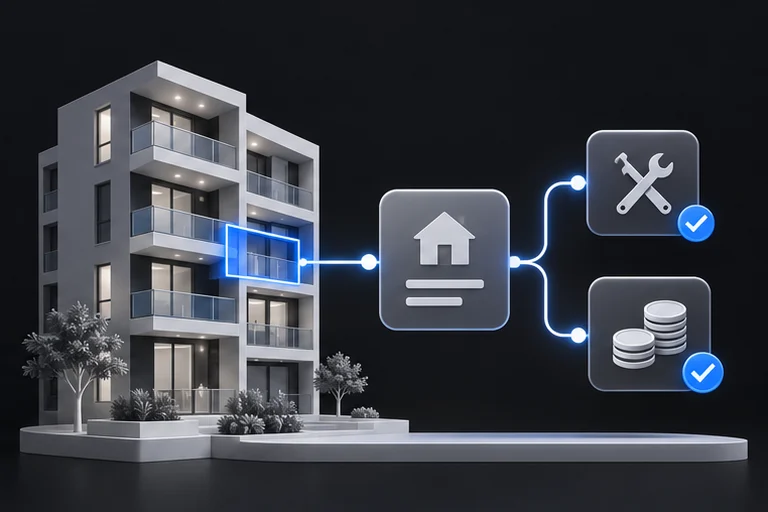
Property management platform development should start with the records a team must trust when residents call. Which unit is linked to the request? Is the payer the owner, tenant or an authorized representative? Has a payment cleared, or has somebody uploaded a receipt for review?
Set the boundary for property management platform development
Give buildings and units stable identifiers, and keep occupants’ history separate from physical units. Define the permissions of an owner, tenant, service agent and accountant. Start with either maintenance or collections if the two have different dependencies. In collections, name the accounting record and build an exception path for unmatched amounts.
Follow a request through closure
A maintenance form should create an assigned ticket with a category, timestamp and status. Test reassignment and a resident reopening the request. Decide what the resident can see about the technician, and what counts as resolved. Monitor elapsed time to action and repeat tickets for the same issue.
Anonymized scenario: a residential compound
A hypothetical Egyptian operator pilots maintenance in two buildings. Management imports unit identifiers, adds a triage queue and lets residents confirm closure. Collection features wait until finance agrees how to record partial payments, refunds and receipts linked to the wrong unit.
FAQ
Should collections and maintenance launch together?
Launch together when they share reliable records and both owners can support the pilot. Otherwise use one journey to validate the unit and permissions model.
Can the platform replace the property CRM?
First decide which system owns sales leads, contracts, units and resident cases. Integration may preserve a valuable sales workflow.
Scope your first resident journey
Bring Code Tank a sanitized unit list and a maintenance or collections case that currently crosses teams.